
Tidak ada produk di keranjang.
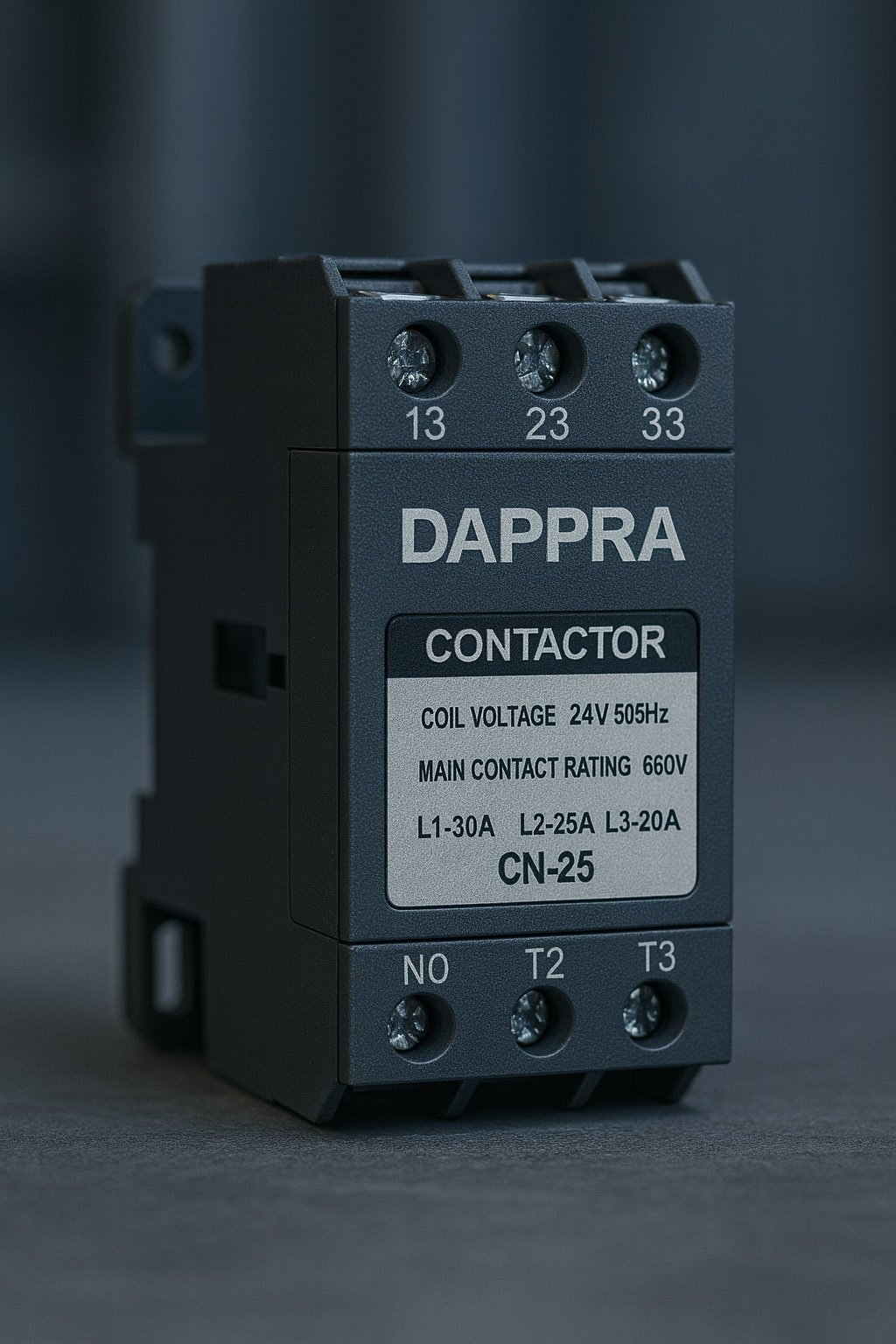
How to Select the Right Contactor: Parameters, Structure, and Industrial Application Guide
1. Introduction — Contactors Are the Most Common Actuators in Industrial Control
Electromagnetic contactors are widely used in:
- Motor starting
- Heating control
- Power switching
- Automation machinery
A wrong contactor selection leads to:
- Short lifespan
- Coil overheating
- Contact welding
- Unstable engagement
Correct understanding of structure and key parameters is essential for proper sizing and reliable operation.
2. Contactor Structure
2.1 Main Contacts
The main power contacts carry:
- Motor current
- Heater loads
- High inrush current
Made of silver alloy for durability.
2.2 Auxiliary Contacts
Used for:
- Self-holding
- Interlocks
- PLC feedback
- Status signaling
Available as NO / NC combinations.
2.3 Coil Assembly
The coil energizes the magnetic core:
- AC coil: common for power control
- DC coil: less vibration, quieter operation
Voltage options include:
- AC 220V / 110V
- DC 24V / 12V
2.4 Arc Extinguishing Chamber
Important for:
- Breaking high voltage
- Reducing arc length
- Protecting contacts
A worn arc chamber can lead to dangerous arcing.
3. Key Parameters to Consider
3.1 AC-1 / AC-3 Load Categories
AC-3 is the most important for motors:
- AC-1 → Resistive loads
- AC-3 → Motor start/stop
- AC-4 → Reversing + inching (high stress)
3.2 Ie — Rated Current
Must match:
- Motor rated current
- Peak starting current tolerance
3.3 Ue — Rated Operational Voltage
Applies to the main contact voltage.
3.4 Coil Voltage (AC/DC)
Wrong coil voltage causes:
- Coil hum
- Overheating
- Weak engagement
4. How to Select the Right Contactor
4.1 Match Motor Power
Check motor nameplate:
- Voltage
- Power
- Full-load current
Choose the matching AC-3 current rating.
4.2 Identify Load Type
For example:
- Pumps → AC-3
- Heaters → AC-1
- Reversing motors → AC-4
4.3 Need Auxiliary Contacts?
Choose additional blocks:
- 1NO1NC
- 2NO2NC
- Timer blocks (optional)
5. Wiring Principles
5.1 Main Circuit → Three-Phase Control
L1 / L2 / L3 → Main load → Motor
5.2 Auxiliary Contacts → Self-Hold / Interlock
Used in control loop, not in power loop.
5.3 Coil Terminals → Control Power
Typically:
- A1 / A2 for coil
- One terminal often grounded or DC negative
6. Common Engineering Problems
6.1 Contactor Vibration
Caused by:
- Low coil voltage
- DC coil ripple
- Mechanical wear
6.2 Contact Blackening
Due to:
- Overload
- High inrush
- Arcing
6.3 Coil Overheating
Usually from:
- Incorrect coil voltage
- Excessive switching frequency
- Poor ventilation
6.4 Excessive Noise
AC coils vibrate if:
- Magnetic plate is dirty
- Coil weakening
7. Best Practices
✔ Install RC Snubber or Varistor
Reduces back-EMF and protects PLC outputs.
✔ Keep the Control Cabinet Ventilated
Prevents overheating of coils and contacts.
✔ Regularly Tighten Terminals
Loose terminals cause resistance and heating.
✔ Choose High-Quality Contactors for Heavy Loads
Low-cost parts fail quickly under AC-3 duty.

















Tambah komentar
Anda harus masuk untuk berkomentar.