
Tidak ada produk di keranjang.
How to Optimize Control Cabinet Cooling: Fan vs Filter vs Heat Management
1. Introduction — High Temperature is the Silent Killer of Electronics
In control cabinets, excessive heat is one of the main reasons why:
- PLCs fail intermittently
- VFDs trip
- Power supplies degrade
- Relays burn out prematurely
Poor ventilation or cooling design significantly reduces equipment lifespan.
Proper heat management is essential for stable automation systems.
2. Cooling Methods for Control Cabinets
2.1 Natural Convection
Heat rises and escapes through openings.
- Zero power consumption
- Only effective for low-heat systems
- Not suitable for cabinets with VFDs or SMPS
2.2 Forced Cooling (Cooling Fans)
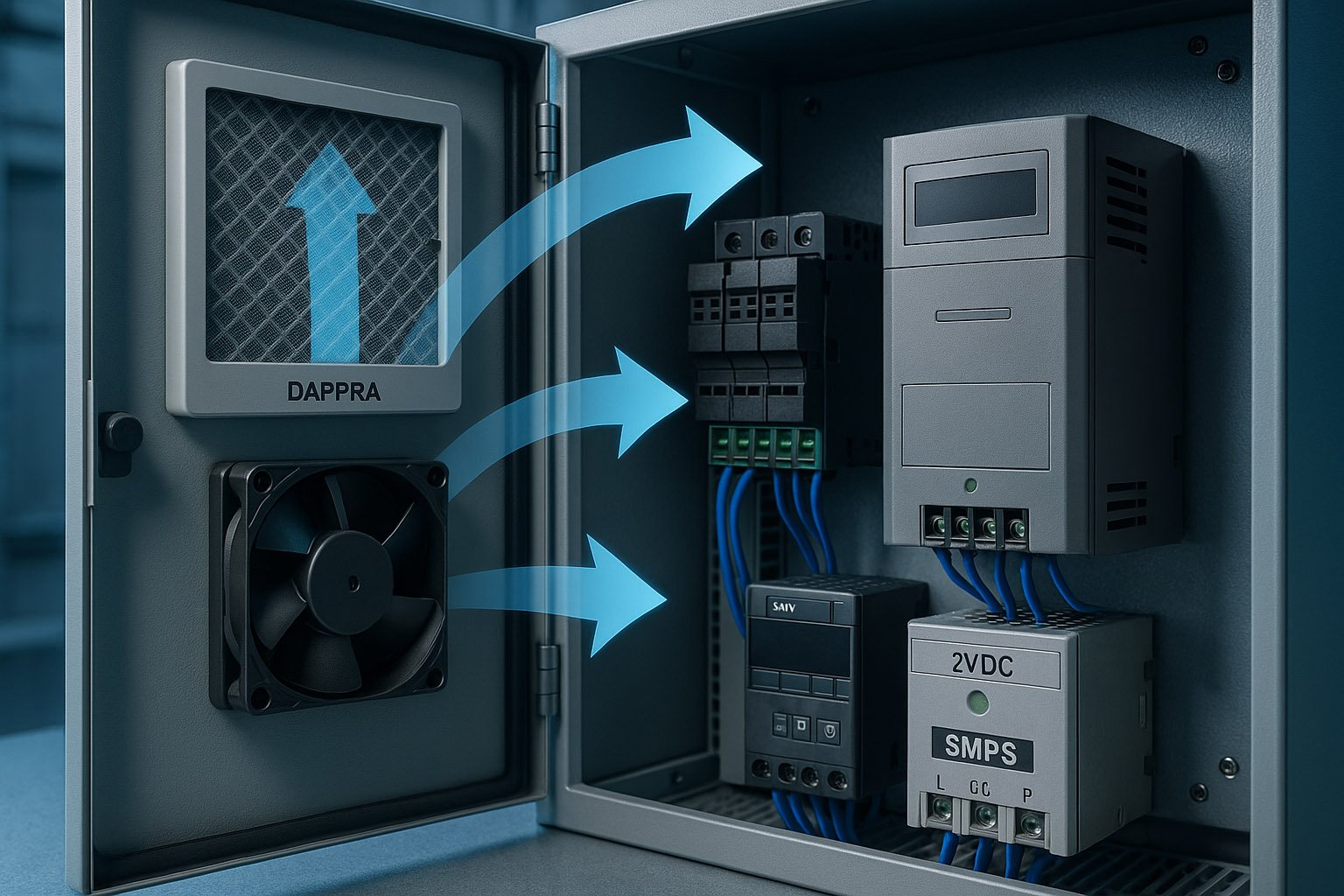
Fans actively push hot air out and pull cool air in.
- Most common method
- Highly effective
- Must consider airflow direction
2.3 Filtered Ventilation
Air filters improve airflow while preventing dust.
- Necessary in dusty factories
- Filters must be cleaned regularly
- Reduced airflow when dirty
2.4 Heat Exchangers (Air-to-Air / Air-to-Water)
Used in high-temperature or sealed environments.
- No exchange with outside air
- Ideal for food, pharmaceutical, or outdoor cabinets
3. Identifying Heat Sources Inside a Control Cabinet
The biggest contributors to heat include:
3.1 PLC Power Supply (SMPS)
Switching power supplies generate continuous heat.
3.2 VFD (Inverter)
Major source of heat due to fast switching.
3.3 Dense Relay or IO Modules
Clusters of components trap heat pockets.
3.4 Control Boards and Communication Modules
High-frequency chips accumulate heat easily.
4. Airflow and Cooling Path Design
Good cooling is not just about adding a fan — it’s about airflow direction.
Recommended airflow:
Bottom → Intake → Upward → Exhaust (Top)
Key considerations:
- Place intake filters at lower section
- Place exhaust fans at upper section
- Avoid “air short-circuit” where air recirculates inside
- Ensure hot components (VFDs) have direct airflow path
5. Real Engineering Cases
Case 1 — Cabinet at 50°C Causes PLC Failure
Poor ventilation led to internal overheating → PLC I/O dropouts.
Case 2 — VFD Hotspot Causes Thermal Trip
Temperature buildup around the VFD due to blocked airflow.
6. Common Cooling Problems
❌ Clogged Filters
Causes airflow restriction → heat buildup.
❌ Fan Rotation Direction Incorrect
Fan blowing inward instead of outward.
❌ Over-sealed Cabinets
No air exchange → hot air trapped inside.
7. Best Practices for Cooling Optimization
✔ Clean filter pads regularly
Dirty filters reduce airflow by up to 60%.
✔ Add dedicated fans near heat-intensive devices
Especially for VFDs.
✔ Use temperature controllers
Automatically activate cooling fans based on thresholds.
✔ Reserve 20–30% internal space in the cabinet
Avoid dense packing that traps heat.






Tambah komentar
Anda harus masuk untuk berkomentar.