
Tidak ada produk di keranjang.
Circular vs Rectangular Industrial Connectors: Differences and Applications
Circular vs Rectangular Industrial Connectors: Differences and Applications
Industrial connectors come in many shapes and configurations, but circular and rectangular connectors dominate the automation landscape. These two connector families serve very different purposes and offer unique advantages in mechanical strength, electrical performance, and installation flexibility. Selecting the correct connector type directly determines system reliability, cable integrity, and ease of maintenance. Understanding their characteristics allows engineers to design robust electrical architectures for sensors, actuators, motors, and control equipment.
Characteristics of Circular Connectors
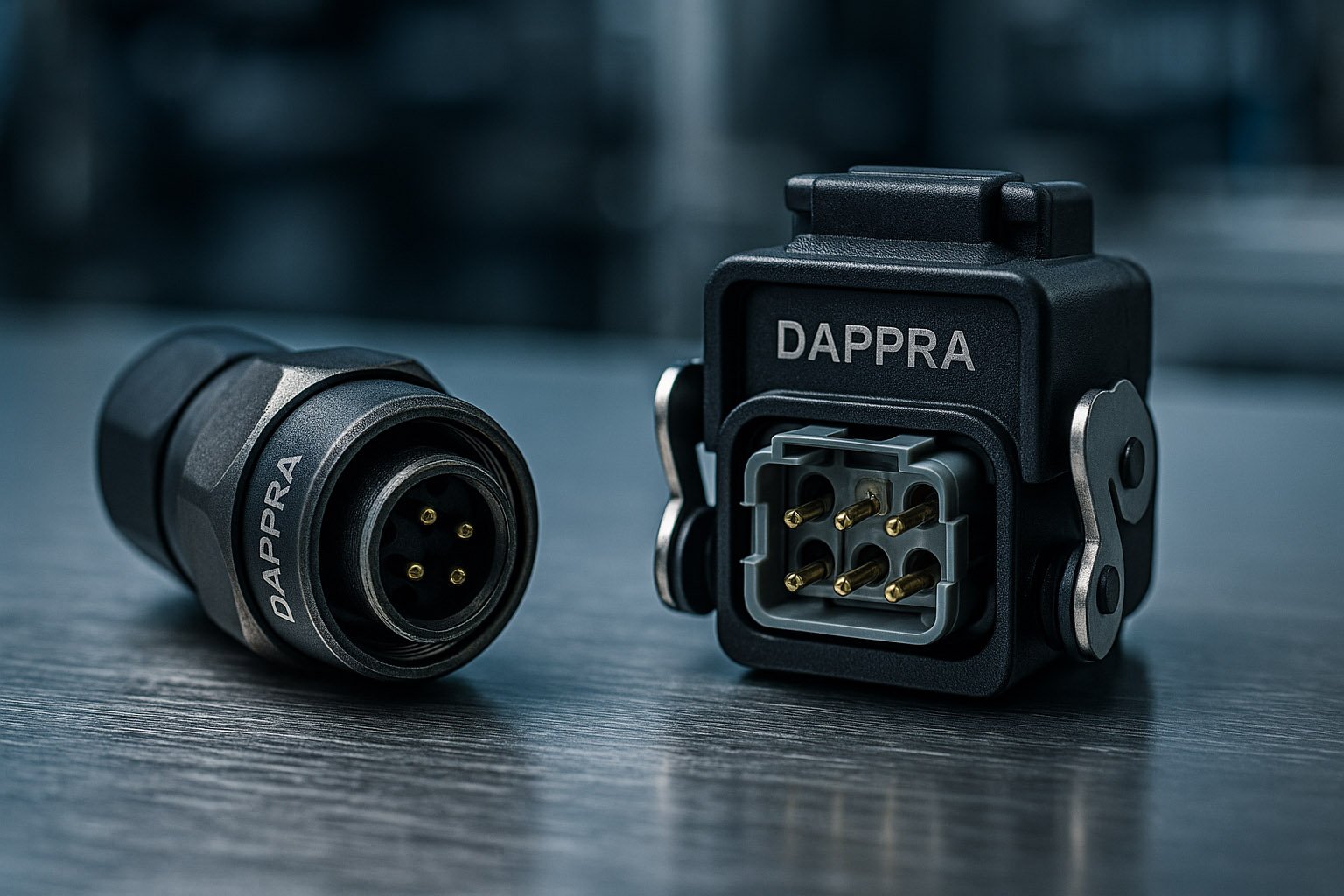
Circular connectors are widely used in sensor networks, field devices, and compact machinery due to their excellent sealing performance and highly reliable locking mechanisms. Their round geometry distributes mechanical stress evenly, making them highly resistant to vibration. Threaded, bayonet, and push-pull locking structures ensure secure mating even under mechanical shock or continuous movement.
Another advantage of circular connectors is their strong waterproof capability. Many circular series—such as M8, M12, and larger industrial variants—achieve IP67 or IP68 protection because the round sealing surface allows uniform compression of the gasket. This makes circular connectors ideal for harsh environments, including outdoor equipment, mobile machinery, and washdown conditions.
Circular connectors typically support signal-level wiring, including digital inputs, analog outputs, power for small devices, and communication protocols such as industrial Ethernet. They are especially common for sensors, encoders, and vision hardware where compact size and robust sealing are required.
Characteristics of Rectangular (Heavy-Duty) Connectors
Rectangular connectors, often referred to as heavy-duty connectors (HDCs), are engineered for high-current, multi-signal, and modular configurations. Their rectangular housings allow more efficient use of space, enabling higher pin counts and the integration of multiple functional modules. This flexibility makes rectangular connectors the preferred solution for control cabinets, CNC systems, robot end-effectors, and machine interfaces that require rapid disconnection for maintenance.
Rectangular connectors excel in applications requiring large power capacity. High-current modules, sometimes rated above 100 A, can be combined with signal modules, pneumatic modules, or encoder interfaces. This hybrid capability reduces wiring complexity and improves the serviceability of complex machines.
The locking mechanisms on rectangular connectors—typically lever-style or cam-lock systems—ensure strong mechanical clamping. These systems maintain stable electrical contact even under vibration or mechanical strain. While rectangular connectors generally do not match circular connectors in waterproof capability, many heavy-duty housings achieve IP65 or IP67 when properly assembled with seals, cable glands, and hoods.
Signal Types and Compatibility
Circular connectors are optimized for weak-signal communication and low to medium power distribution. They are widely used for proximity sensors, photoelectric sensors, IO modules, and Ethernet networks. Their standardized coding—such as A-code, B-code, D-code, or X-code in M12 connectors—prevents mis-mating and ensures compatibility across sensor and communication devices.
Rectangular connectors handle a wider variety of electrical categories, including high-voltage power, multi-channel analog signals, encoder feedback, fieldbus networks, and even compressed air. The modular design enables mixed configurations that no circular connector can match in density or versatility.
Application Scenario Comparison
Circular connectors dominate applications where vibration, moisture, or environmental sealing are the primary concerns. Examples include outdoor sensors, conveyors, robotics, mobile equipment, and machinery exposed to dust or washdown cleaning. Their compact size is ideal for dense sensor installations and devices with limited mounting space.
Rectangular connectors are preferred in equipment that demands rapid installation, easy servicing, or high-current delivery. They are common in control cabinets, machine tools, industrial robots, and modular production lines. For systems requiring frequent disconnection—such as mold-changing equipment or removable machine modules—rectangular connectors significantly reduce downtime.
Common Engineering Problems
Circular connectors may loosen if not properly locked in high-vibration installations. Cable strain imposed at severe angles can also stress the connector interface. Additionally, using non-shielded circular connectors in high-EMI environments can cause signal interference.
Rectangular connectors may fail when not fully seated or when lever locks are not engaged. Partial insertion can cause arcing or thermal damage. Improperly sized cable glands may compromise the IP rating, allowing dust or moisture to enter the housing. Overloading the current rating of power modules is another common engineering mistake.
Best Practices for Connector Selection
Engineers should choose circular connectors for applications requiring excellent sealing, compact form factor, and vibration resistance. For high-current or multi-signal applications, rectangular connectors are the superior choice. Systems with frequent maintenance benefit from rectangular connectors’ modular design and quick-disconnect capability. Regardless of the connector type, proper strain relief, shielding, and torque application are necessary to ensure long-term reliability.
















Tambah komentar
Anda harus masuk untuk berkomentar.