
Industrial Plug Selection Guide: Choosing the Right Current, Voltage, and Material
Industrial plugs play a critical role in delivering safe and reliable electrical power to machines, control cabinets, and heavy equipment. Unlike household plugs, industrial connectors must withstand harsh environments, high mechanical stress, and electrical loads that vary significantly depending on application. Choosing the wrong plug can lead to overheating, insulation damage, downtime, or even fire hazards. Understanding plug types, current and voltage ratings, material choices, and common engineering pitfalls is essential for designing safe and durable industrial power systems.
Types of Industrial Plugs
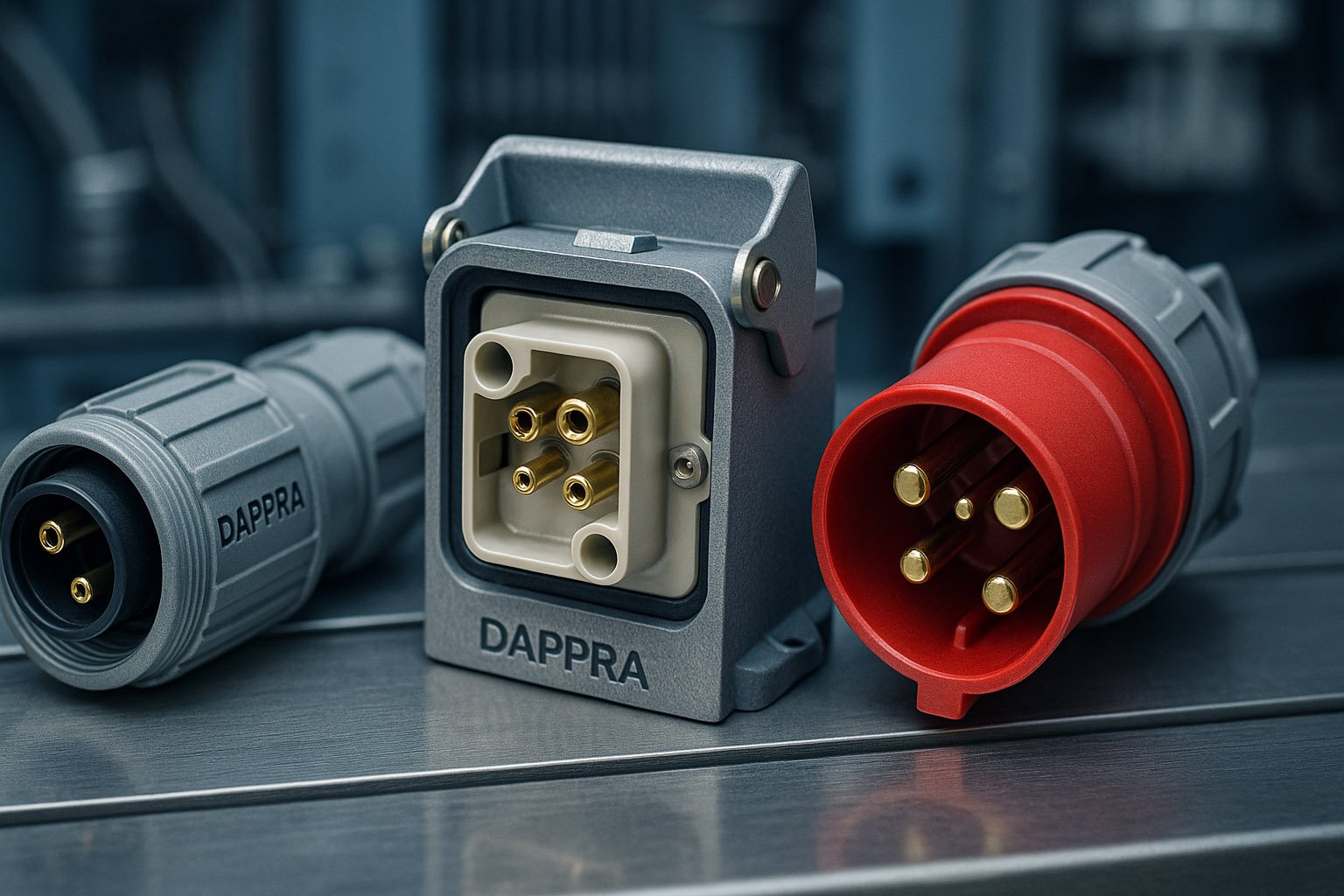
Industrial plugs come in several mechanical formats, each designed for different environments and electrical requirements. Circular plugs are widely used for compact installations where reliable locking and vibration resistance are essential. Their threaded or bayonet-style locking systems prevent accidental disconnection and ensure consistent contact pressure.
Heavy-duty rectangular connectors, commonly known as HDCs, are designed for high-current and multi-signal applications. Their modular architecture accommodates combinations of power, signal, pneumatic, and high-voltage modules within a single housing. This makes them ideal for CNC machines, industrial robots, processing equipment, and automation cells where rapid equipment replacement or frequent maintenance is required.
Three-phase industrial plugs, often used in distribution boxes and factory power outlets, are purpose-built to handle higher loads. These connectors follow standardized pin configurations and locking mechanisms that prevent mismatched voltage levels or phase errors.
Key Electrical Parameters: Current, Voltage, and Contact Resistance
The most important electrical specification of an industrial plug is its current rating. This determines the maximum continuous load the connector can safely carry without exceeding thermal limits. In general, the selected plug should exceed the actual load by at least 30% to provide margin for fluctuations, startup inrush, and elevated ambient temperatures.
Voltage rating is equally crucial. Industrial plugs must be designed to withstand the system’s rated voltage plus any transient conditions, especially in environments with motors, switching power supplies, or inductive loads. The insulation material, creepage distances, and internal geometry all influence the connector’s ability to resist breakdown.
Low contact resistance is essential for efficient current conduction. Poor-quality contacts or oxidized surfaces increase resistance and generate heat, eventually causing failure. Plugs designed for high-current operation often use larger pin diameters, thicker plating, and spring-loaded contact structures to maintain consistent low-resistance contact over time.
Material Considerations: Housing, Contacts, and Flame Resistance
Material selection determines how well the plug withstands environmental, mechanical, and chemical stress. Metal housings provide superior strength, electromagnetic shielding, and heat resistance. They are well-suited for outdoor installations, high-temperature machinery, and equipment exposed to oil or impact. Plastic housings, typically made from reinforced polyamide, offer lighter weight and corrosion resistance but may not provide the mechanical durability required for heavy-duty applications.
Contact plating has a significant effect on long-term performance. Gold-plated contacts offer low contact resistance and excellent corrosion protection, making them ideal for low-level signal applications. Tin plating is more common in power connectors, providing good conductivity and economical protection. In corrosive or high-moisture environments, nickel or gold plating is preferred for reliability.
Flame-retardant materials are essential in electrical systems. Industrial plugs must comply with UL94 or similar standards, ensuring that the housing does not propagate flames in the event of electrical faults. High-quality connectors use self-extinguishing materials with strong thermal stability.
Logical Selection Process for Choosing the Right Plug
Choosing the correct industrial plug requires evaluating the electrical load, environmental conditions, vibration levels, and frequency of connection cycles. High-current loads demand larger pin diameters and high-temperature-rated materials. Equipment exposed to oil, chemicals, or outdoor weather conditions benefits from metal housings and sealed gaskets. Systems exposed to vibration—such as conveyors, presses, or mobile platforms—require locking mechanisms that cannot loosen unintentionally.
It is also important to consider maintainability. Applications requiring frequent disconnection benefit from ergonomic locking levers or push-pull mechanisms that reduce wear and operator fatigue.
Common Engineering Issues and Failure Modes
Even well-designed plugs can fail if improperly selected or installed. Overheating commonly results from undersized connectors, poor-quality contacts, or corrosion. Loose terminals increase resistance, creating hotspots that accelerate material degradation. Inadequate locking mechanisms may allow vibration to loosen the plug, leading to intermittent power loss or arcing.
Another frequent issue is selecting a plug with insufficient ingress protection (IP rating). Outdoor equipment or humid environments require plugs with seals that prevent moisture ingress. Failure to match the correct IP rating leads to corrosion, insulation breakdown, and electrical shorts.
Best Practices for Reliable Plug Selection
To ensure long-term performance, engineers should always choose a plug rated at least 1.3 times the actual current draw. Metal housings are recommended for outdoor or high-temperature environments. Where vibration is present, connectors with threaded or lever-locking mechanisms should be used. Flame-retardant materials should be prioritized to meet safety standards, and all plugs should be inspected regularly for wear, corrosion, and contact degradation.
By applying these principles, industrial plugs can deliver safe, stable, and efficient power distribution throughout the automation system.














Tambah komentar
Anda harus masuk untuk berkomentar.