
Tidak ada produk di keranjang.
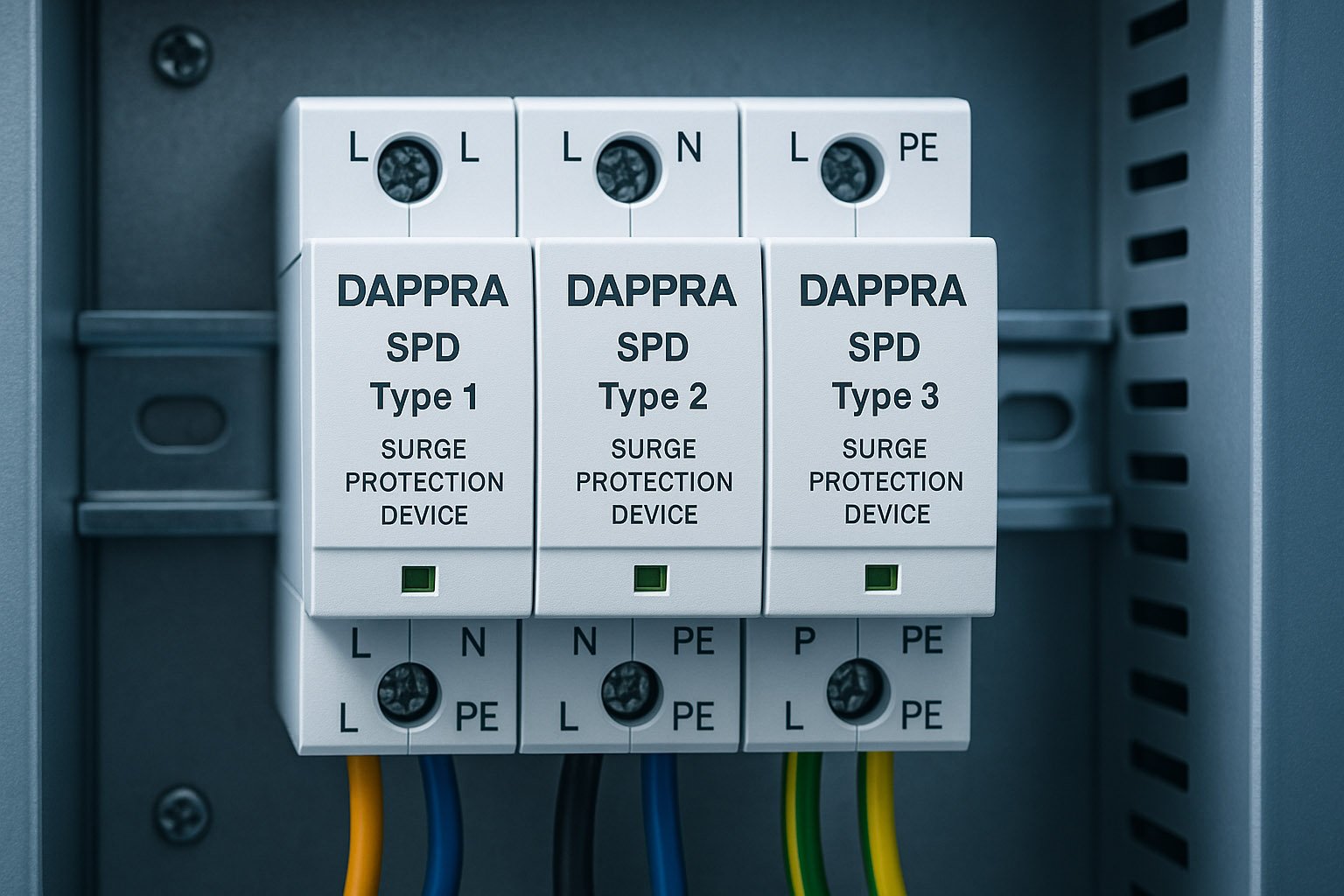
Industrial Surge Protection (SPD) Guide — How to Protect Your Control System from Voltage Spikes
1. Introduction — Surges Are the Hidden Killers of Control Systems
Voltage surges are one of the most destructive yet least visible threats in industrial environments.
Sources include:
- VFD switching
- Motor startup
- Lightning-induced transients
- Power grid switching
Without proper surge protection, sensitive devices like PLCs, HMIs, and sensors can be damaged instantly or experience long-term degradation.
That’s why installing SPDs (Surge Protective Devices) is critical.
2. How an SPD Works
2.1 MOV (Metal Oxide Varistor) Technology
MOVs clamp high voltage by absorbing the surge energy.
When voltage exceeds a threshold:
- MOV becomes conductive
- Surge energy is diverted to ground
- Voltage is kept within safe limits
2.2 Instant Voltage Clamping
SPD activates in microseconds, preventing:
- PLC burnout
- Communication failures
- Power module damage
2.3 Multi-Level Protection
Industrial systems use:
- Type 1 SPD — Main incoming surge protection
- Type 2 SPD — Distribution or control cabinet protection
- Type 3 SPD — Local protection near precision equipment
3. Where Surges Come From
3.1 Lightning Induction
Even without direct strike, nearby lightning creates strong electromagnetic pulses (EMP).
3.2 Power Grid Switching
Large loads connecting/disconnecting cause instant voltage spikes.
3.3 Motor & VFD Operations
Inductive loads release stored energy to the line when switching.
3.4 High-Frequency SMPS
Industrial switching power supplies can inject noise back to the grid.
4. SPD Installation Locations
4.1 Type 1 SPD — Main Electrical Room
Installed at:
- Main switchboard
- Incoming breaker
Protects from external surges.
4.2 Type 2 SPD — Control Cabinet
Installed inside:
- PLC cabinets
- Machine control stations
Protects sensitive equipment.
4.3 Type 3 SPD — Precision Devices
Installed near:
- Sensors
- Communication modules
- Instrumentation devices
Provides final stage protection.
5. SPD Circuit Structure
SPD wiring typically follows:
L / N → SPD → PE (Ground)
Grounding system differences:
- TN-S
- TT
- IT
Importance of Ground Resistance
Good grounding dramatically improves SPD performance.
Recommended: < 4 Ω
6. Common Problems with SPD Installations
6.1 SPD Ground Wire Too Long
Causes:
- Increased clamping voltage
- Failed protection
- Slower response
Short leads = better protection.
6.2 Poor Ground Connection
High impedance ground makes SPD ineffective.
6.3 MOV Aging
MOV lifetime decreases after absorbing many surges.
SPDs must be inspected and replaced periodically.
7. Best Practices
✔ Ensure SPD Has a Solid Ground Connection
Low impedance is essential.
✔ Use Multi-Level Surge Protection
Type 1 + Type 2 + Type 3 combination.
✔ Test and Replace MOVs Regularly
Follow manufacturer recommendations.
✔ Keep SPD Wiring as Short as Possible
Especially the PE line.







Tambah komentar
Anda harus masuk untuk berkomentar.