
Tidak ada produk di keranjang.

Control Panel Wiring Standards: How to Build a Professional and Clean Control Cabinet
1. Introduction — Wiring Quality Affects Safety and Reliability
In industrial automation, control panel wiring is more than aesthetics.
Good wiring directly affects:
- System safety
- Maintenance efficiency
- Electrical noise suppression (EMI)
- Component lifespan
A clean control cabinet reflects engineering professionalism and prevents many hidden failures.
2. Control Cabinet Structure
2.1 Separation of Power and Control Zones
Cabinets are typically divided into:
- High-voltage zone: contactors, circuit breakers, overload relays
- Low-voltage control zone: PLCs, relays, sensors
- I/O field wiring zone: terminal blocks, signal cables
This reduces interference and improves maintainability.
2.2 Rail and Wiring Duct Layout
DIN rails and wiring ducts must be arranged logically:
- Vertical ducts for trunk cables
- Horizontal ducts for branching
- Rails placed to avoid heat accumulation
2.3 Component Placement Planning
General structure:
- PLC at the center for easy wiring
- Relays near PLC outputs
- Contactors at bottom for heat dissipation
- Power supply on isolated rail
- I/O terminals aligned neatly
3. Wiring Principles
3.1 Strong–Weak Current Separation
- Power lines and signal lines must NOT share the same duct
- High-current lines (AC motors) must be routed away from PLC signals
3.2 Avoid High and Low Voltage Overlap
- Never zip-tie AC 380V and DC 24V together
- Crossing must be at 90° to minimize coupling
3.3 Signal vs Power Line Cross Management
Signal cables should be:
- Shielded
- Routed in separate ducts
- Grounded on one side only
4. Grounding System
4.1 Single-Point vs Multi-Point Ground
- Single-point grounding preferred for PLC and instrumentation
- Multi-point grounding suitable only for large power cabinets
4.2 Shielded Cable Grounding Guidelines
- Ground only one side: PLC side
- Avoid grounding motor-side shield (noise injection risk)
5. Engineering Case Examples
5.1 Typical Wiring Mistakes
Common errors include:
- Mixed strong/weak wiring
- Excessive wire length
- Unlabeled wires
- Messy duct routing
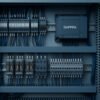
5.2 Example of a Clean, Professional Control Cabinet
Features:
- All wires in ducts
- Labeled with numbering tubes
- Neat right-angle cable turning
- Distribution optimized for heat flow
6. Common Problems
6.1 EMI Causing PLC Misbehavior
Caused by:
- Poor grounding
- Parallel routing of AC and DC lines
- Missing shielding
6.2 Messy Wiring Makes Maintenance Difficult
Results in:
- Hard to trace signals
- Wrong rewiring
- Higher downtime
6.3 Loose Terminals Causing Faults
Causes:
- Vibration
- Temperature changes
- Improper torque
7. Best Practices
✔ Use Numbered Ferrules
Ensures clear maintenance and troubleshooting.
✔ Modular Wiring
Group wires by function:
- Power
- I/O
- Field signals
- Communications
✔ Keep Duct Covers Clean and Straight
Professional appearance + better airflow.
✔ Tighten Every Terminal Regularly
Loose terminals are the #1 cause of failures.



















Tambah komentar
Anda harus masuk untuk berkomentar.